
What Is Refresh Rate and Why Does It Matter? Read This Before Buying a New Smartphone
When smartphone brands launch a new device, they often highlight features like the processor, camera, battery, and refresh rate. Terms such as 60Hz, 90Hz, 120Hz, and even 144Hz are frequently mentioned during launch events. However, many buyers still don't fully understand what refresh rate means and how it affects everyday smartphone usage.
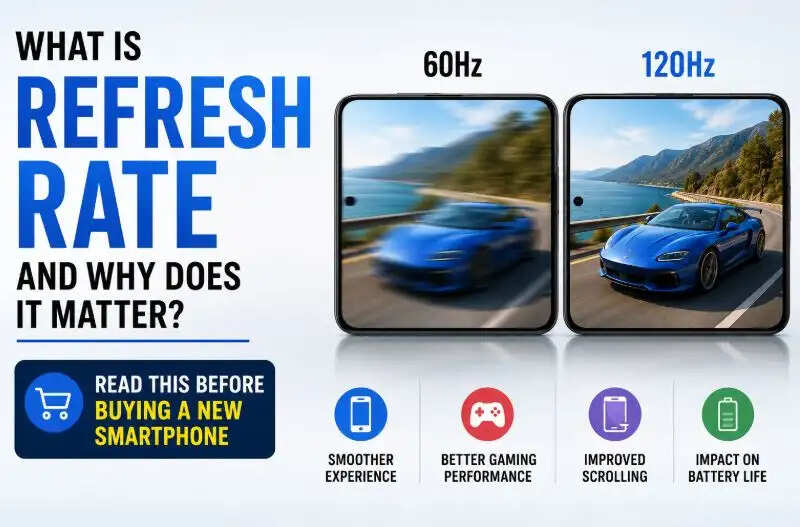
Delhi News Info Desk: If you're planning to buy a new smartphone, understanding the display refresh rate can help you make a better purchasing decision and choose a device that offers the best user experience.
What Is Refresh Rate?
In simple terms, refresh rate refers to the number of times a display updates or refreshes the image on the screen every second.
Refresh rate is measured in Hertz (Hz).
For example:
-
60Hz display = Screen refreshes 60 times per second.
-
90Hz display = Screen refreshes 90 times per second.
-
120Hz display = Screen refreshes 120 times per second.
-
144Hz display = Screen refreshes 144 times per second.
The higher the refresh rate, the more frequently the display updates, resulting in smoother visuals and better responsiveness.
Why Is Refresh Rate Important?
Every smartphone screen continuously displays a series of images or frames. These frames change rapidly to create smooth motion when scrolling, gaming, or watching videos.
A higher refresh rate allows the screen to display more frames every second, making movements appear much smoother and more natural.
This is why premium smartphones increasingly feature 90Hz, 120Hz, or even higher refresh rate displays.
Benefits of a Higher Refresh Rate
1. Smoother Scrolling Experience
When browsing social media, reading articles, or navigating menus, a higher refresh rate makes scrolling noticeably smoother.
Users often notice a significant difference when switching from a 60Hz display to a 120Hz display.
2. Better Gaming Performance
For mobile gamers, refresh rate plays an important role in improving responsiveness and visual fluidity.
Games that support high refresh rates can feel more immersive, especially during fast-moving action scenes.
3. Improved Touch Response
Higher refresh rate screens often provide faster touch feedback, making the device feel quicker and more responsive.
4. Enhanced Viewing Experience
Watching high-frame-rate content on a display with a higher refresh rate can result in smoother motion and reduced blur.
Does a Higher Refresh Rate Affect Battery Life?
Yes, this is the trade-off many users overlook.
A display refreshing 120 times per second consumes more power than one refreshing 60 times per second. As a result, smartphones with higher refresh rates may experience faster battery drain if the feature is constantly active.
To address this issue, many modern smartphones now use adaptive refresh rate technology, which automatically adjusts the refresh rate based on the content being displayed.
For example:
-
Reading an article may use 60Hz.
-
Scrolling social media may switch to 90Hz or 120Hz.
-
Gaming may activate the maximum refresh rate.
This helps balance smooth performance and battery efficiency.
Which Refresh Rate Should You Choose?
60Hz
-
Suitable for basic smartphone users.
-
Good for calling, messaging, and casual browsing.
-
Usually found in entry-level devices.
90Hz
-
Offers noticeably smoother scrolling.
-
Ideal for most users.
-
Common in mid-range smartphones.
120Hz
-
Excellent for gaming and premium smartphone experience.
-
Delivers very smooth animations and responsiveness.
-
Found in many flagship and upper mid-range devices.
144Hz and Above
-
Designed primarily for gaming enthusiasts.
-
Provides ultra-smooth visuals.
-
Available in select gaming smartphones.
Refresh Rate Isn't Just for Smartphones
Refresh rate is important not only when buying a smartphone but also when purchasing:
-
Smart TVs
-
Gaming monitors
-
Laptops
-
Tablets
A higher refresh rate can significantly improve the viewing and gaming experience across all display devices.
Final Verdict
Before buying a new smartphone, don't focus only on the camera, processor, or battery capacity. The display refresh rate is equally important because it directly affects how smooth and responsive your phone feels during daily use.
For most users, a 90Hz or 120Hz display offers the best balance between performance and battery life. However, if battery backup is your top priority, a 60Hz display may still be a practical choice.
Understanding refresh rate before making a purchase can help you choose a smartphone that delivers a better overall user experience.