
Quick Commerce Pricing Dynamics: Diet Coke Packs See Higher Premium Values on Blinkit App
Convenience Retail Economics: Analyzing the Premium Pricing Structures of Instant Delivery Networks
May 29, 2026, 10:44 IST
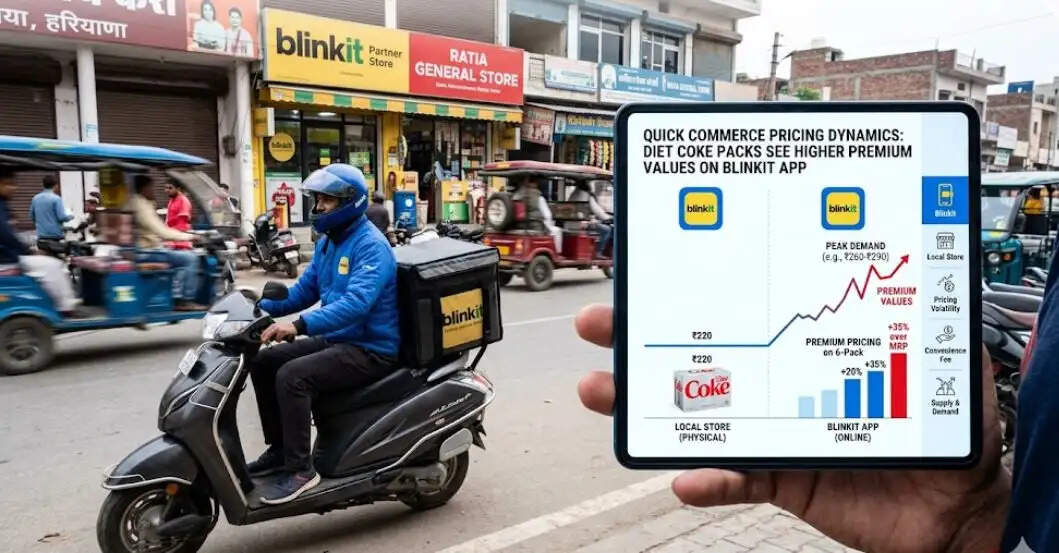
The rapid growth of instant delivery apps has transformed urban shopping habits, with consumers increasingly willing to pay a premium for speed and convenience.
This trend has drawn attention online as users analyze the pricing strategies used by different retail channels, noting instances where items like Diet Coke priced at 40 rupees sold for 199 on Blinkit in specific configurations.
This pricing difference highlights the varying costs between standard retail item sizes and premium, imported, or larger multi-pack variations offered on instant delivery apps.
This pricing structure reflects the underlying logistics model used by quick commerce platforms, which balance real-time warehouse tracking, localized sorting hubs, and rapid courier distribution networks.
While a standard individual can might carry a low base price at a traditional grocery storefront, the convenience of having specific variants—such as specialized caffeine-free or premium imported versions—delivered to your doorstep in minutes often involves added service and distribution fees.
As instant delivery networks continue to expand, finding the right balance between competitive pricing and rapid service will be key to keeping urban consumers engaged.