
New Government Export Duty on Petrol and Diesel Implemented: Aviation Fuel Tax Changes
The government announces a new export duty tax on petrol, diesel, and aviation turbine fuel (ATF) effective from June 1. Learn about the economic impact.
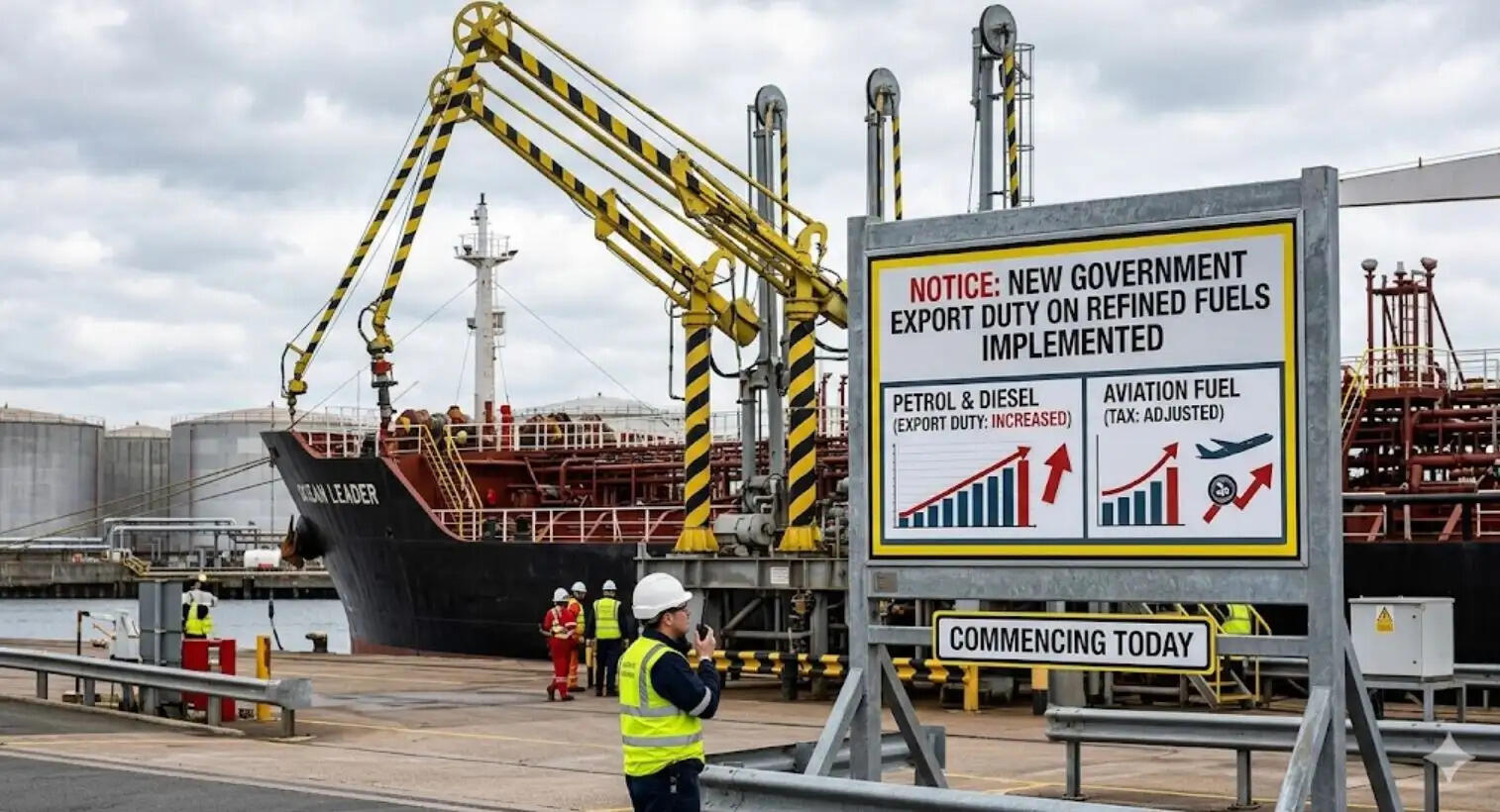
Government Levies Fresh Export Taxes on Domestic Refined Petroleum Products In a significant regulatory shakeup, the ministry has officially declared the imposition of a new export duty tax on petrol and diesel.
This strategic financial policy is aimed at managing domestic supply levels, ensuring energy security, and capturing windfall profits generated by oil refining firms exporting fuels out of the country. Financial institutions are analyzing how these custom adjustments will influence trade balances.
Aviation Turbine Fuel (ATF) Hit with New Fiscal Tariff Regulations Alongside conventional commercial fuels, the regulatory update introduces a substantial export tax on aviation fuel (ATF).
This specific metric directly penalizes domestic oil marketing companies that prioritize highly lucrative international shipments over fulfilling national aviation demands. By enforcing a stricter fiscal barrier at the borders, policymakers plan to maintain stable domestic reserves for local airline carriers.
Implementation Timelines and Domestic Energy Market Implications According to the official government gazette, these updated export tariff mandates go live starting on June 1.
Industry experts predict that the sudden move will incentivize local refineries to redirect massive volumes of fuel back into national gas stations and supply lines. While international export margins will likely take a short-term hit, local consumer markets can look forward to structural availability safeguards.
Macroeconomic Strategy: Windfall Tax Controls on Fuel Refiners This sudden move represents the state's ongoing commitment to adjusting fiscal metrics based on global energy margins.
When refining margins expand heavily abroad, regional corporations tend to maximize outbound shipments, sometimes leading to local dry spells.
This newly structural petroleum export levy ensures that corporate resource monetization directly contributes to national treasury reserves while prioritizing local infrastructure stability.
New Government Export Duty on Petrol and Diesel Implemented: Aviation Fuel Tax Changes
Meta Description: The government announces a new export duty tax on petrol, diesel, and aviation turbine fuel (ATF) effective from June 1. Learn about the economic impact.
Government Levies Fresh Export Taxes on Domestic Refined Petroleum Products In a significant regulatory shakeup, the ministry has officially declared the imposition of a new export duty tax on petrol and diesel.
This strategic financial policy is aimed at managing domestic supply levels, ensuring energy security, and capturing windfall profits generated by oil refining firms exporting fuels out of the country. Financial institutions are analyzing how these custom adjustments will influence trade balances.
Aviation Turbine Fuel (ATF) Hit with New Fiscal Tariff Regulations Alongside conventional commercial fuels, the regulatory update introduces a substantial export tax on aviation fuel (ATF).
This specific metric directly penalizes domestic oil marketing companies that prioritize highly lucrative international shipments over fulfilling national aviation demands. By enforcing a stricter fiscal barrier at the borders, policymakers plan to maintain stable domestic reserves for local airline carriers.
Implementation Timelines and Domestic Energy Market Implications According to the official government gazette, these updated export tariff mandates go live starting on June 1.
Industry experts predict that the sudden move will incentivize local refineries to redirect massive volumes of fuel back into national gas stations and supply lines. While international export margins will likely take a short-term hit, local consumer markets can look forward to structural availability safeguards.
Macroeconomic Strategy: Windfall Tax Controls on Fuel Refiners This sudden move represents the state's ongoing commitment to adjusting fiscal metrics based on global energy margins.
When refining margins expand heavily abroad, regional corporations tend to maximize outbound shipments, sometimes leading to local dry spells.
This newly structural petroleum export levy ensures that corporate resource monetization directly contributes to national treasury reserves while prioritizing local infrastructure stability.