
Global Currency Trends: Inside the 60 Nations Using Plastic Currency
Polymer Banknotes: These 60 Countries Have Fully Transitioned to Plastic Currency
Jun 6, 2026, 10:22 IST
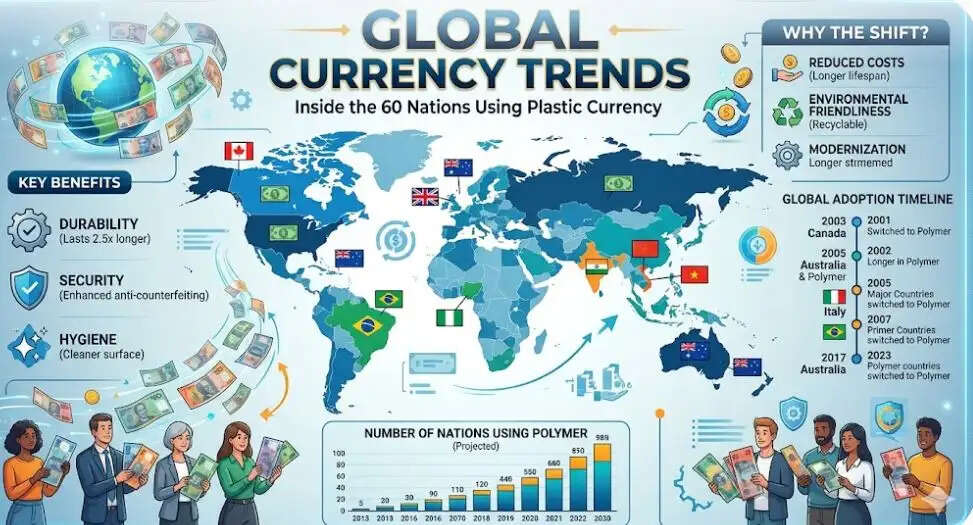
Delhi News Info Desk: While traditional cotton-paper banknotes remain common in many parts of the world, over 60 nations have transitioned to plastic currency.
Utilizing advanced polymer film substrates, these modern banknotes are rapidly changing the landscape of international printing.
Australia was the first country to implement a complete polymer banknote series back in 1988, completely disrupting traditional security printing methods.
The Clear Structural Benefits of Polymer Notes Over Paper Bills
"Polymer banknotes last almost 2.5 to 4 times longer than conventional paper notes, making them incredibly cost-effective for central banks."
Apart from extreme durability under stressful climate conditions, plastic currency allows for advanced anti-counterfeiting security features, such as complex transparent windows and color-shifting metallic holograms.
Additionally, polymer notes are completely waterproof, resistant to dirt accumulation, and fully recyclable at the end of their operational lifecycle, reducing the carbon footprint of national currency distribution networks.